

What Is the Day of Arafah?
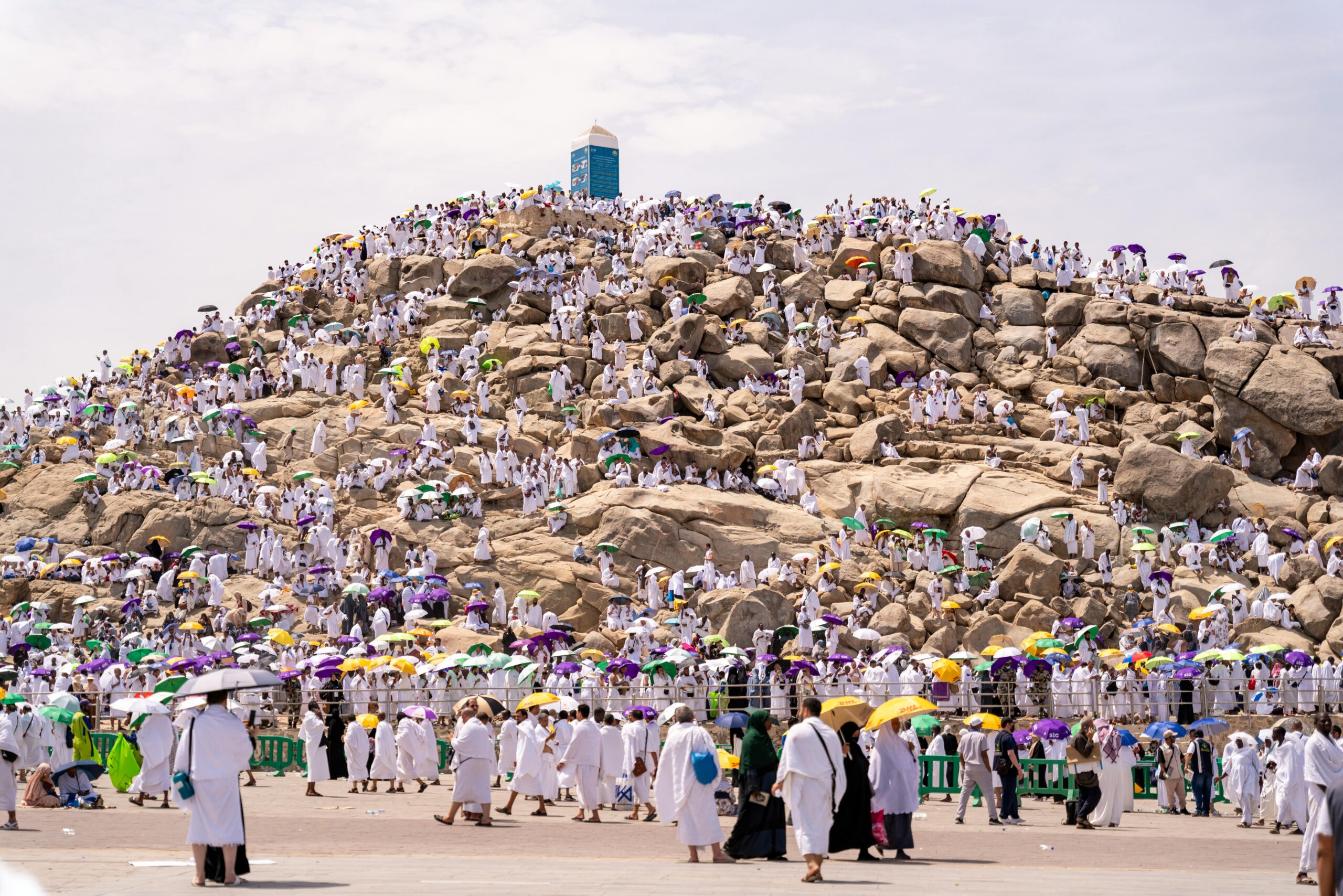
The Day of Arafah falls on the 9th of Dhul Hijjah, the day before Eid al-Adha. It is the central day of Hajj and widely regarded by scholars as the most significant single day in the entire Islamic calendar. On this day, the Hajj pilgrims travel from Mina to the plain of Arafah, a vast open expanse approximately 20 kilometres east of Makkah, where they stand in prayer and supplication from midday until sunset. This standing is called Wuquf, and it is so central to Hajj that the Prophet, peace be upon him, summarised the entire pilgrimage in four words.
“Al-Hajju Arafah. Hajj is Arafah.” (Sunan al-Tirmidhi, graded Sahih)
That statement is one of the most compressed and significant in the entire Sunnah. A Muslim can perform every other rite of Hajj correctly and completely, but if they miss the standing at Arafah, their Hajj is invalid. Conversely, a Muslim who arrives at Arafah even moments before the sunset of the 9th has fulfilled the central obligation of the pilgrimage. The day is that essential.
For the more than 1.8 billion Muslims who are not performing Hajj this year, the Day of Arafah is not a distant event to observe from afar. It is a direct spiritual opportunity, one of the most generous Allah has placed in the entire Islamic calendar. Understanding it fully is the first step toward using it fully.
The History: Why Arafah Was Chosen
The significance of the plain of Arafah is rooted in early Islamic history and, according to some scholarly traditions, extends even further back. The name Arafah is derived from the Arabic root meaning to know or to recognise. Several narrations connect this naming to the moment Adam and Hawwa, peace be upon them, were reunited on earth after their descent from Jannah, recognising each other at this plain after their separation. While this narration is not found in the Sahih collections and is treated with caution by hadith scholars, it reflects the deep symbolic resonance the location carries in Islamic consciousness as a place of recognition, return, and reconnection.
What is historically confirmed is the Prophet’s own practice at Arafah. During his Farewell Hajj in the 10th year of Hijra, the Prophet, peace be upon him, stood at Arafah and delivered what became one of the most consequential speeches in human history. He addressed over 100,000 companions on the plain, establishing principles of human equality, the sanctity of life and property, the rights of women, and the prohibition of all pre-Islamic practices of oppression and usury. He then asked the companions: have I conveyed the message? They answered: yes. He said: O Allah, bear witness.
It was at Arafah, on that same day, that one of the most celebrated verses of the Quran was revealed.
“This day I have perfected for you your religion and completed My favour upon you and have approved for you Islam as your religion.” (Surah Al-Ma’idah, 5:3)
When Umar ibn al-Khattab, may Allah be pleased with him, heard this verse recited, he wept. A Jewish man approached him and said: if this verse had been revealed to us, we would have taken that day as a celebration. Umar replied: I know exactly when it was revealed. It was revealed on two days of celebration simultaneously: the Day of Arafah and a Friday. The completion of the religion, the perfection of Allah’s favour, and the approval of Islam were announced to the world on the plain of Arafah. That alone would be sufficient to mark the day as one of the greatest in history.
What Allah Does on the Day of Arafah
Beyond what the pilgrims do on this day, what Allah does is the more remarkable half of the story. The Prophet described the Day of Arafah in terms that should make every Muslim stop and pay attention.
“There is no day on which Allah frees more people from the Fire than the Day of Arafah. He comes close and then boasts about them to the angels, saying: What do these people want?” (Sahih Muslim)
This hadith deserves careful reflection. Allah, on this day, draws near to the gathering at Arafah in a manner that befits His majesty, and then speaks of the believers gathered there with a pride that is, in the context of Islamic theology, one of the most extraordinary expressions of divine mercy in any prophetic narration. He asks the angels rhetorically what the people gathered there want, knowing that what they want is His forgiveness, His mercy, and His admission to Jannah.
The scholars explain that this is the day on which Shaytan is most visible in his humiliation. Ibn al-Qayyim writes that Shaytan is never seen more angry, more defeated, or more wretched than on the Day of Arafah, because he witnesses the scale of Allah’s forgiveness descending upon the gathering. Everything Shaytan spent a lifetime building, the sins, the doubts, the missteps of an entire year or more, can be erased on this single day for those who turn to Allah with sincerity.
“Shaytan is not seen to be more humiliated, more defeated, more wretched, or more furious on any day than on the Day of Arafah, because of what he sees of the descent of mercy and Allah’s pardoning of great sins.” (Muwatta Imam Malik, attributed to Talhah ibn Ubaydullah al-Taymi)
The Fast of Arafah: Two Years of Sins Forgiven
For those not performing Hajj, the single most recommended act on the Day of Arafah is fasting. The reward attached to this fast is among the most explicit and generous in the entire Sunnah.
“Fasting on the Day of Arafah expiates the sins of the previous year and the coming year.” (Sahih Muslim)
Two years of sins. One fast. This is not a minor incentive. Among the voluntary fasts in the Islamic calendar, the fast of Arafah stands in a category of its own. The fast of Ashura expiates one year of sins. The fast of Monday and Thursday carry ongoing reward. But the fast of Arafah, confirmed in Sahih Muslim from the Prophet himself, peace be upon him, wipes out sins across two complete years.
It is important to note that for Hajj pilgrims already standing at Arafah, the scholars recommend they do not fast on this day. The physical demands of the pilgrimage are significant, and the Prophet himself did not fast at Arafah during his Farewell Hajj. The fast is specifically the gift Allah has placed for those who are not on Hajj: a way of connecting the entire Ummah to the spiritual weight of the day without requiring them to be physically present at the plain.
The intention for the fast should be made the night before, as with any voluntary fast. If someone wakes on the day and decides to fast without having made the intention the previous night, the majority of scholars permit this for voluntary fasts as long as nothing invalidating the fast has been consumed. Either way, the intention is what makes the act.
The Best Dua of the Day
The Prophet, peace be upon him, described the dua made on the Day of Arafah as the best supplication a Muslim can make. He then taught the specific words he considered most representative of that dua.
“The best supplication is the supplication on the Day of Arafah, and the best that I and the prophets before me have said is: La ilaha illallah, wahdahu la sharika lah, lahul mulku wa lahul hamdu, wa huwa ala kulli shay’in qadir. There is no god but Allah, alone, with no partner. To Him belongs all sovereignty and all praise, and He is over all things capable.” (Sunan al-Tirmidhi, graded Hasan)
This supplication is pure Tawhid: a declaration of Allah’s oneness, His sovereignty, His worthiness of all praise, and His absolute power. The Prophet is saying that on the greatest day of the year, the most powerful thing a Muslim can put on their tongue is not a list of requests but a declaration of who Allah is. From that declaration, everything else follows. When you know who you are speaking to, you know how to ask.
Beyond this specific dua, the Day of Arafah is a day for open supplication. The Prophet described the people of Arafah as emerging from the day like newborns, their sins entirely forgiven. Every sincere dua made on this day carries extraordinary weight. For those fasting at home, the period between Dhuhr and Maghrib, corresponding to the time the pilgrims are standing at Arafah, is the most recommended time for extended supplication.
How to Spend the Day of Arafah
Whether you are at Hajj or at home, the Day of Arafah calls for a specific kind of presence. Here is what the Sunnah recommends for those not performing Hajj.
- Fast from Fajr to Maghrib: Make the intention the night before. This single fast expiates two years of sins and is the most recommended voluntary act in the Islamic calendar for non-pilgrims.
- Recite the dua of Arafah abundantly: La ilaha illallah, wahdahu la sharika lah, lahul mulku wa lahul hamdu, wa huwa ala kulli shay’in qadir. Repeat it throughout the day, especially in the hours between Dhuhr and Maghrib.
- Make sincere and extended dua: Ask for what you genuinely need. Ask for forgiveness. Ask for the Akhirah before the dunya. The gates of acceptance are open on this day in a way they are not open on ordinary days.
- Recite Takbeer and dhikr: Allahu Akbar, Allahu Akbar, La ilaha illallah, Allahu Akbar, Allahu Akbar, wa lillahil hamd. This is the Takbeer of the days of Dhul Hijjah and carries particular weight on the 9th.
- Read Quran with reflection: Set aside dedicated time for recitation. The Day of Arafah is a day of spiritual elevation and the Quran is the primary vehicle for that elevation.
- Give in charity: The reward of every good deed is amplified during these days. Even a small amount given with full intention carries a weight on Arafah that it would not carry on an ordinary day.
Arafah and the Unity of the Ummah
There is a dimension of the Day of Arafah that is easy to miss when you are focused on individual worship. On this single day, every Muslim on earth is oriented toward the same event, asking the same Lord, on the same day. The pilgrims at Arafah represent every nation, language, ethnicity, and social class within Islam. They wear the same two pieces of white cloth. They make the same supplication. No sheikh stands above the factory worker. No king is distinguishable from the refugee.
When you fast at home on this day, you are fasting in alignment with that gathering. Your Dhuhr prayer on the 9th of Dhul Hijjah is performed at roughly the same time as the pilgrims begin their standing. Your dua in the hours before Maghrib overlaps with the most sacred hours of Wuquf. The physical distance between you and Arafah is real. The spiritual connection is also real.
This is what the Ummah means in practice. Not a political concept or an aspirational slogan, but a living community of believers distributed across the earth, unified by the same calendar, the same obligations, and on the Day of Arafah, the same supplication directed toward the same Lord who, according to His Prophet, peace be upon him, boasts about them to the angels.
A Day That Comes Once a Year
The Day of Arafah does not announce itself. It arrives on the 9th of Dhul Hijjah every year, quiet and significant in equal measure. For the pilgrims, it is the culmination of a journey they may have waited their entire lives to make. For everyone else, it is an offer: a single day on which Allah’s mercy descends at a scale that the Prophet said is unmatched on any other day of the year.
Two years of sins forgiven with a single fast. The best supplication in all of Islamic history recommended for this specific day. The completion of the religion announced on this plain. The Prophet’s Farewell Sermon delivered here. Allah drawing near and asking the angels what His servants want.
What this day asks of you in return is not complicated. It asks for the intention the night before, the fast from Fajr to Maghrib, the presence of heart in supplication, and the awareness that the Lord you are speaking to on this day is the same Lord who stood with the first Muslims at the most significant gathering in the history of this religion.
Fast the 9th. Make dua. Do not let this day pass in silence.