

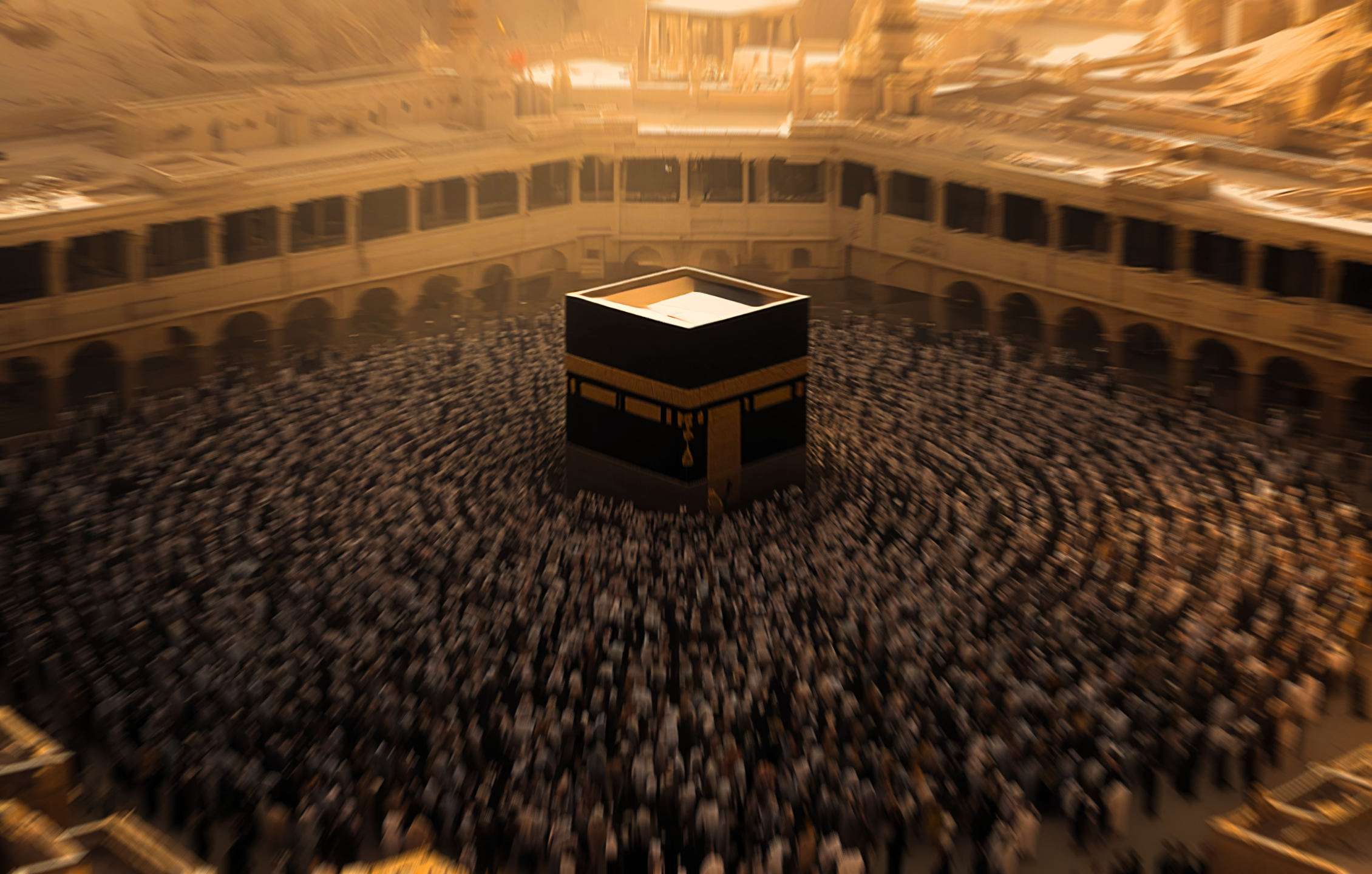
Every year, millions of Muslims from every corner of the globe leave behind their homes, their comforts, and their worldly status to converge upon the sacred city of Makkah. They travel not for a vacation or a convention, but to fulfill a profound command that has echoed through the centuries.
This is Hajj—the fifth pillar of Islam.
For those looking at this journey from the outside, or for believers seeking to deepen their understanding of their faith, grasping the true essence of Hajj is essential. It is not merely a collection of physical rituals; it is an intense, transformative migration of the soul back to its Creator.
The Linguistic and Spiritual Meaning of Hajj
In the Arabic language, the word Hajj literally translates to “to intend a journey” or “to repair to a place of veneration.” Islamically, it refers to the annual pilgrimage to the Kaaba—the House of Allah—and the surrounding sacred sites in Makkah, performed during the specific Islamic month of Dhul Hijjah.
Hajj is a mandatory duty for every adult Muslim, male or female, who possesses the physical health and financial means to undertake it without causing hardship to their dependents. Allah ﷻ explicitly establishes this obligation in the Quran:
“And pilgrimage to the House is a duty unto Allah for mankind, for him who can find a way thither.” — Surah Ali ‘Imran, 3:97
When a believer enters the boundaries of Makkah for Hajj, they enter a state of sacred intent. It is an intentional pausing of earthly life to focus entirely on the eternal.
Why is Hajj Important? Its Spiritual Significance
The importance of Hajj cannot be overstated. It represents the ultimate convergence of physical, financial, and spiritual worship. While prayer requires your time and charity requires your wealth, Hajj demands your entire being—your money, your physical stamina, your time, and your emotional endurance.
The rewards attached to a properly executed Hajj are unparalleled in the Islamic tradition. The Prophet Muhammad ﷺ beautifully highlighted the life-altering nature of this pilgrimage in multiple authentic narrations:
- Complete Purification: “Whoever performs Hajj for Allah’s pleasure and does not have sexual relations with his wife, and does not do evil or commit sins, then he will return (after Hajj free from all sins) as if he were born new.” (Sahih al-Bukhari 1521)
- The Promise of Jannah: “The reward of Hajj Mabrur (an accepted pilgrimage) is nothing less than Paradise.” (Sahih al-Bukhari 1773)
Beyond the personal purification of the individual believer, Hajj serves as a powerful symbol of the global Muslim community (the Ummah). It is the one time of the year where the absolute equality of mankind is visible to the naked eye.
The Five Days of Hajj: A Step-by-Step Sequence of Rituals
The actual journey of Hajj takes place over five distinct, fast-paced days, beginning on the 8th day of Dhul Hijjah and concluding on the 12th or 13th day. To appreciate the depth of the pilgrimage, one must understand the precise sequence of these rituals.
1. Entering Ihram (The State of Purity)
Before the rituals begin, pilgrims cross designated spiritual boundaries (Meeqat) where they enter a state of consecration called Ihram. Men don two simple, unstitched pieces of white cloth, while women wear modest, plain clothing. All markers of wealth, nationality, and social class are completely removed. While in Ihram, cutting hair, clipping nails, using scented products, and engaging in arguments are strictly forbidden.
2. Day 1 (8th Dhul Hijjah): Heading to Mina
The pilgrimage officially begins as millions move from Makkah to a massive tent city known as Mina. Pilgrims spend the day and night here in quiet reflection, performing their five daily prayers shortened but on time, mentally preparing themselves for the climactic day ahead.
3. Day 2 (9th Dhul Hijjah): The Day of Arafah and Muzdalifah
This is the most critical day of Hajj. After sunrise, the entire mass of pilgrims moves to the plain of Arafah.
From Dhuhr until sunset, they engage in Wuqoof (standing before Allah), raising their hands in desperate, heartfelt supplication. This is where tears are shed, lifetimes of sin are forgiven, and hearts are healed. The Prophet ﷺ said, “Hajj is Arafah.” (Sunan an-Nasa’i).
As soon as the sun sets, without praying Maghrib, the pilgrims depart in silence to an open plain called Muzdalifah. Here, they pray Maghrib and Isha combined, sleep under the open sky, and collect small pebbles for the upcoming rituals.
4. Day 3 (10th Dhul Hijjah): The Day of Sacrifice (Eid al-Adha)
The 10th of Dhul Hijjah is the busiest day for a pilgrim. They return to Mina to perform Ramy—stoning the Jamarat al-Aqabah (the largest of three stone pillars) with seven pebbles, symbolizing Prophet Ibrahim’s rejection of Satan’s whispers.
Following this, an animal sacrifice (Qurbani) is made to feed the poor, mirroring the ram provided by Allah to Ibrahim. Men then shave their heads (Halq) or trim their hair short (Taqseer), and women cut a small lock of hair, allowing them to exit the major restrictions of Ihram. Pilgrims then head to the Kaaba in Makkah to perform Tawaf al-Ifadah (the core circumambulation) and Sa’ee (running between the hills of Safa and Marwa).
5. Days 4 & 5 (11th & 12th Dhul Hijjah): The Days of Tashreeq
Pilgrims return to their tents in Mina for the remaining days. Each afternoon, they stone all three stone pillars (the small, medium, and large Jamarat) to continuously reinforce their internal resistance against temptation and evil. Once completed on the 12th or 13th day, they return to Makkah to perform a final, emotional Tawaf al-Wada (Farewell Tawaf) before heading home.
Deep Spiritual Lessons for the Everyday Believer
Even for those who are sitting at home, far from the plains of Makkah, the structure of Hajj provides timeless lessons that we must apply to our daily lives:
- A Preview of the Day of Judgment: Standing on the burning plains of Arafah, surrounded by millions of people dressed in identical white clothes, all crying out to the same Creator, is an intentional mirror of the day we will be resurrected. It forces us to ask: What have I prepared for my meeting with Allah?
- Radical Equality: Hajj proves that Islam does not care about your bank account, your lineage, or your skin color. In the sight of Allah, the only metric that sets one human being above another is Taqwa (God-consciousness).
- The Power of Absolute Submission: Every single ritual of Hajj—from walking around a stone cube to throwing pebbles at a wall—defies human logic but fulfills Divine wisdom. It trains the believer to say, “I hear, and I obey,” trusting that Allah’s wisdom is far greater than our limited understanding.
Dhul Hijjah arrives quietly every year, bringing Hajj along with it as a beautiful proof that our religion is alive, united, and deeply responsive.
If you have already performed Hajj, use this season to renew the vows you made on Mount Arafah. If you have not yet been invited, let this be the week you sit down, correct your intentions, look at your finances, and make a sincere, tearful dua asking Allah ﷻ to write your name among those who will stand outside His House next year.
May Allah invite us all, and accept the efforts of those currently on the journey. Ameen.