

In the quiet, climate-controlled corridors of massive data centres rising from the Israeli desert, a new kind of warfare is being coded. It isn’t just about drones or tanks; it is about the “War Cloud.”
Project Nimbus, a $1.2 billion contract split between Google and Amazon, is often framed by corporate PR as a benign modernization of government services, digitizing health records or streamlining transit. But beneath the surface lies the technical architecture for a permanent, automated occupation. As of May 2026, this project has evolved from a controversial contract into the primary engine of a “digital apartheid,” where algorithms act as judge, jury, and executioner.

The “Sovereign Cloud”: A Technical Fortress
The most critical feature of Project Nimbus is localization. Unlike standard cloud regions where data might bounce between Ireland, Virginia, or Singapore, the Israeli “Sovereign Cloud” required Google and Amazon to build physical data centers entirely within Israel’s borders.
- The “Legal Shield”: This isn’t just a matter of latency; it is a calculated legal maneuver. By keeping the data on Israeli soil, the Israeli military (IDF) ensures that all operations are governed strictly by domestic law. This bypasses international privacy protections like the GDPR and creates a jurisdictional “black box.” Human rights groups or international investigators cannot subpoena data that resides in a sovereign silo designed specifically to keep them out.
- The Contractual Trap: The contract includes a “No-Boycott” clause. Legally, Google and Amazon have signed away their right to pull the plug. Even if internal ethics boards or international courts find that the cloud is being used to facilitate war crimes, the companies are contractually forbidden from terminating service to any specific government entity,54 including the military units operating in Gaza and the West Bank.
From Data to Death: The AI Kill Chain
Cloud computing is the gasoline for the fire of modern AI. Without the massive computational power of the Nimbus cloud, the IDF’s Decision Support Systems (DSS) would be theoretical; with it, they are industrial-scale targeting machines.
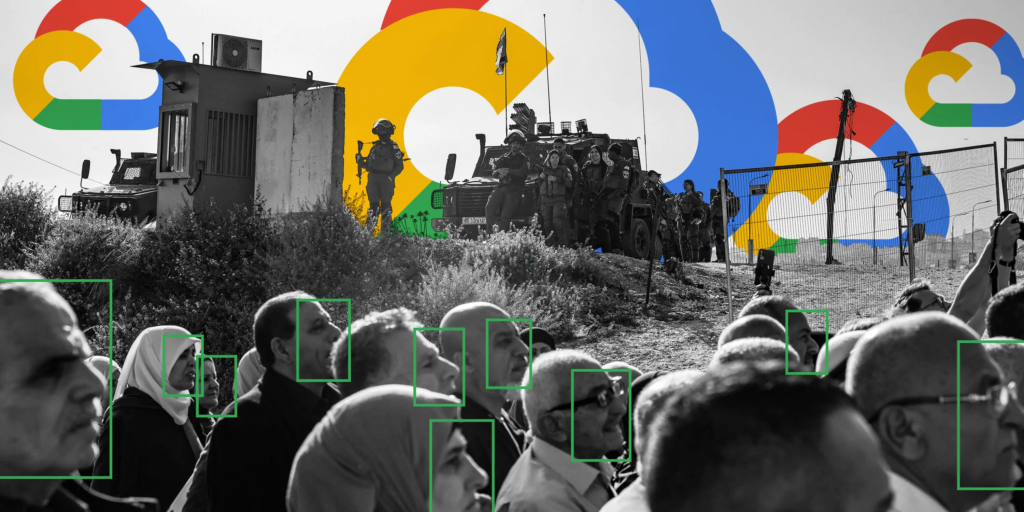
Case Study: The “Target Factory”
- Lavender: An AI system that processes massive datasets to cross-reference Palestinian residents and assign them a “rating” from 1 to 100 based on their likelihood of being a militant. At its peak, Lavender reportedly generated a list of 37,000 targets with minimal human oversight.
- The Gospel (Habsora): Unlike Lavender, which targets people, The Gospel targets infrastructure. It uses the Nimbus cloud to scan thousands of buildings and “recommend” strike zones at a speed no human intelligence officer could match.
The cloud also powers “Where’s Daddy?” a chilling tracking algorithm. This system doesn’t just track targets; it monitors them in real-time and waits until they enter their family homes before flagging them for a strike. The speed of the Google-Amazon cloud allows the military to prioritize “rapid-fire” strikes over the slow, tedious work of human verification, transforming warfare into a high-speed data-processing task.
Furthermore, technology once used for consumer delight, like Google Photos, has been repurposed. The same image categorization algorithms that help you find “pictures of dogs” in your gallery are used to scan thousands of hours of drone footage and satellite imagery. The AI automatically flags “anomalies,” such as a person walking in a restricted zone or a gathering of people, triggering immediate military responses.
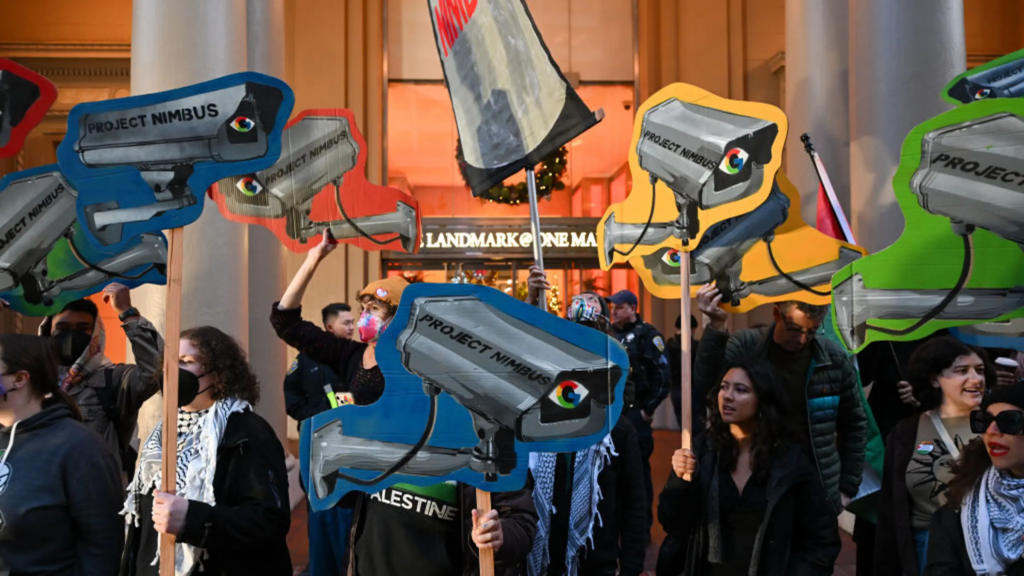
The “Digital Apartheid” Framework
Project Nimbus doesn’t just power active combat; it maintains a state of permanent surveillance in the West Bank and Gaza, creating a social credit system for an occupied population.
- Social Network Mapping: Algorithms now map the “degrees of separation” between Palestinians. If you are in a WhatsApp group with a “suspect,” or if your face is captured on a “Blue Wolf” camera near a protest, the AI updates your profile. Under this framework, innocence is no longer a default state; it is a variable in an equation.
- Predictive Policing: The IDF has transitioned from monitoring past actions to “predicting” future threats. Based on algorithmic probability, civilians are flagged for detention or interrogation before a crime has even occurred. This is the ultimate expression of digital apartheid: a reality where one population is granted the “freedom of the cloud,” while the other is trapped in a digital dragnet.
The Cracks in the Machine: Labor Resistance
The most damning indictment of Project Nimbus comes from the very people who built it. For years, tech workers have warned that their code was being weaponized, and by 2026, that dissent has reached a breaking point.
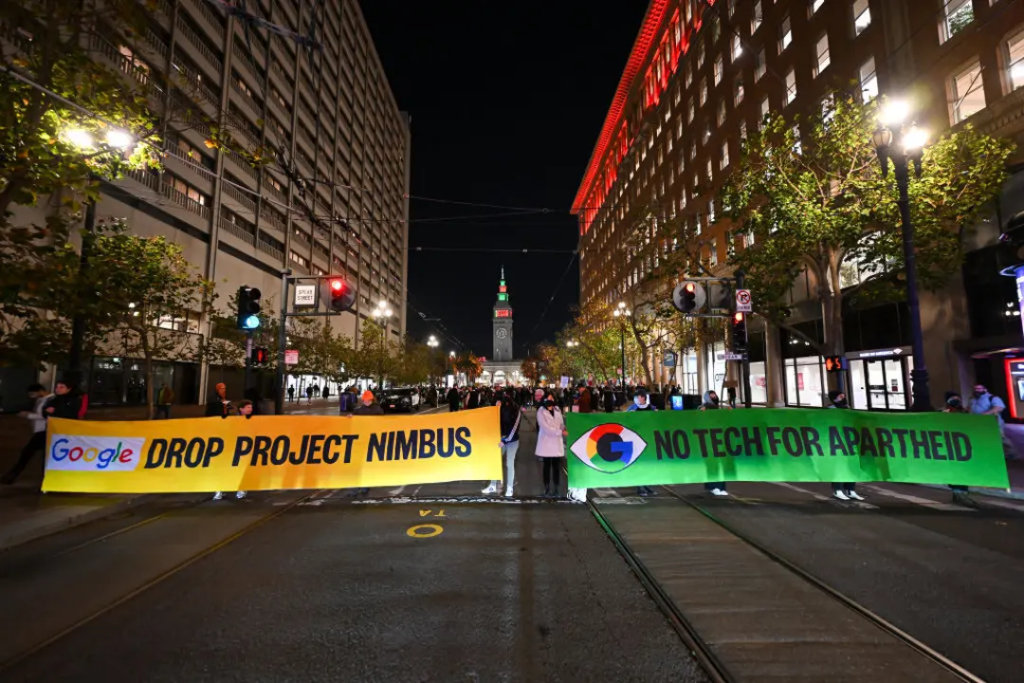
In 2026, more than 1,000 workers at DeepMind (Google’s premier AI lab in the UK) took the unprecedented step of demanding formal union recognition. Their primary goal? To gain a collective veto over military contracts. They argue that as the creators of the world’s most advanced AI, they have a moral obligation to ensure their work isn’t used for automated killing.
The cost of this dissent is high. Since the protests began in 2024, Google has fired over 50 employees for speaking out against Project Nimbus. When a corporation is willing to purge its most talented engineers to protect a military contract, it signals that the “War Cloud” has become more valuable than the company’s “Don’t Be Evil” (now “Do the Right Thing”) legacy.
The Global “War Cloud” Blueprint
Project Nimbus is not an isolated incident; it is a beta test. Google and Amazon are not just selling a service to Israel; they are perfecting a “War-in-a-Box” product that can be exported to any government willing to pay.
This is the future of the military-industrial complex: a seamless integration of Silicon Valley’s “SaaS” (Software as a Service) model with state-sponsored violence. If a “Sovereign Cloud” can shield the IDF from accountability, it can do the same for any regime looking to automate the suppression of dissent or the management of an occupation.

As the lines between tech companies and defense contractors vanish, we must ask: What is the purpose of innovation? Technology should be a tool for human connection, for solving the climate crisis, and for expanding the horizons of medicine. When it becomes a hidden engine for state violence, it ceases to be “progress.” It becomes a cage.
The whistleblowers at Google and Amazon are not just fighting for their jobs; they are fighting for the soul of the digital age. It is time the rest of the world started listening.