

Sudan is experiencing one of the most devastating humanitarian crises in the world today. Millions have been forced from their homes, cities have been reduced to rubble, and essential systems such as healthcare, education, and food access have collapsed. Yet despite the sheer scale of this catastrophe, Sudan’s war continues largely outside the focus of sustained global attention and meaningful international action.
In this episode of The Muslimi Experience, host Mamoun S. Hassan is joined by Palestinian journalist Mansour Shouman, who recently reported from inside Sudan. Drawing on firsthand experiences, the conversation examines why Sudan’s suffering has been normalized, how geopolitics and resource control fuel the conflict, and why Sudanese voices, particularly its youth, are central to any path forward.
The Roots of the Conflict: Power, Resources, and Long-Term Destabilization
Sudan’s war did not emerge overnight, nor is it the result of internal chaos alone. At the center of the conflict is control. Sudan is extraordinarily rich in natural resources, a reality that has made it a target for armed groups and external actors seeking influence and leverage in the region.
As Mansour Shouman explains, this resource wealth is a driving force behind the actions of the Rapid Support Forces and their international backers. The struggle for control has been unfolding through a long-term strategy of destabilization, fragmentation, and political manipulation that spans decades. Many Sudanese now recognize that what they are living through is not random violence, but the result of deliberate geopolitical planning stretching back 20 to 30 years.
Sudan’s historical position also matters. For decades, the country stood as a strong supporter of the Palestinian cause, a stance that placed it in direct opposition to powerful interests that favored weakening Sudan’s regional influence. Within this broader context, regions such as Darfur have been systematically targeted, despite their deep Islamic roots and cultural significance. The violence, as described in the episode, reflects intent rather than coincidence.
A Humanitarian Collapse on an Unprecedented Scale
The consequences of this war are visible everywhere. Khartoum, once a functioning capital, is now largely destroyed. Infrastructure has collapsed, the airport is closed, and daily life as it once existed is no longer possible. Hospitals have been reduced to rubble or rendered inoperable, leaving civilians without access to basic medical care. Schools across the country have shut down entirely, disrupting the lives of millions of children.
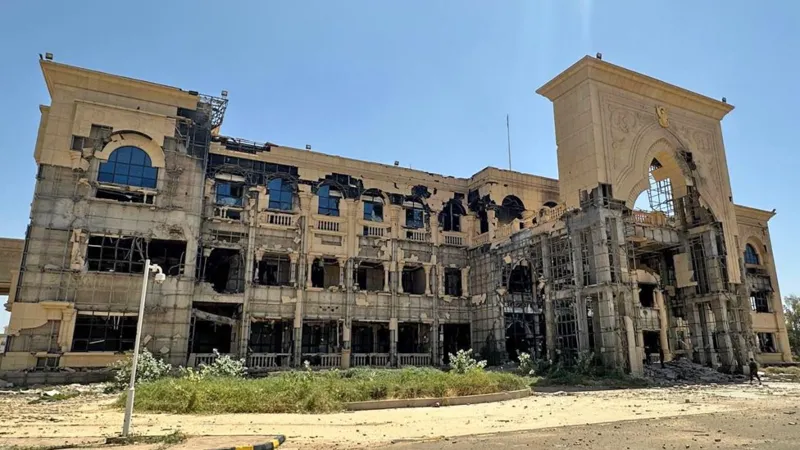
The United Nations has labeled Sudan’s education shutdown the largest in the world, with approximately 17 million children affected. At the same time, nearly 14 million people have been displaced, many of them relying entirely on food baskets, hygiene kits, and temporary shelter to survive.
What makes the situation even more dire is the shrinking humanitarian response. Due to global funding cuts, international aid agencies are expected to significantly reduce or halt operations in Sudan. For a population already pushed to the brink, this withdrawal threatens catastrophic consequences.
Atrocities That Remain Largely Unseen
Beyond the statistics lies a reality that is far more difficult to confront. During his time in refugee camps, Mansour Shouman encountered stories of violence that rarely reach global audiences. Civilians described systematic abuse carried out by armed groups, including sexual violence against young girls and women. Families live in constant fear, with no meaningful protection and little hope for accountability.
One account Shouman shares underscores the brutality of life under occupation, where even domestic spaces are violated and trauma becomes routine. These are not isolated incidents. They are part of a pattern that reflects the complete erosion of civilian safety in Sudan’s war.
Media Silence and the Cost of Being Ignored
One of the most painful realities for Sudanese communities is not only the violence itself, but the silence surrounding it. Despite the scale of displacement and destruction, Sudan’s crisis remains poorly covered and widely misunderstood.
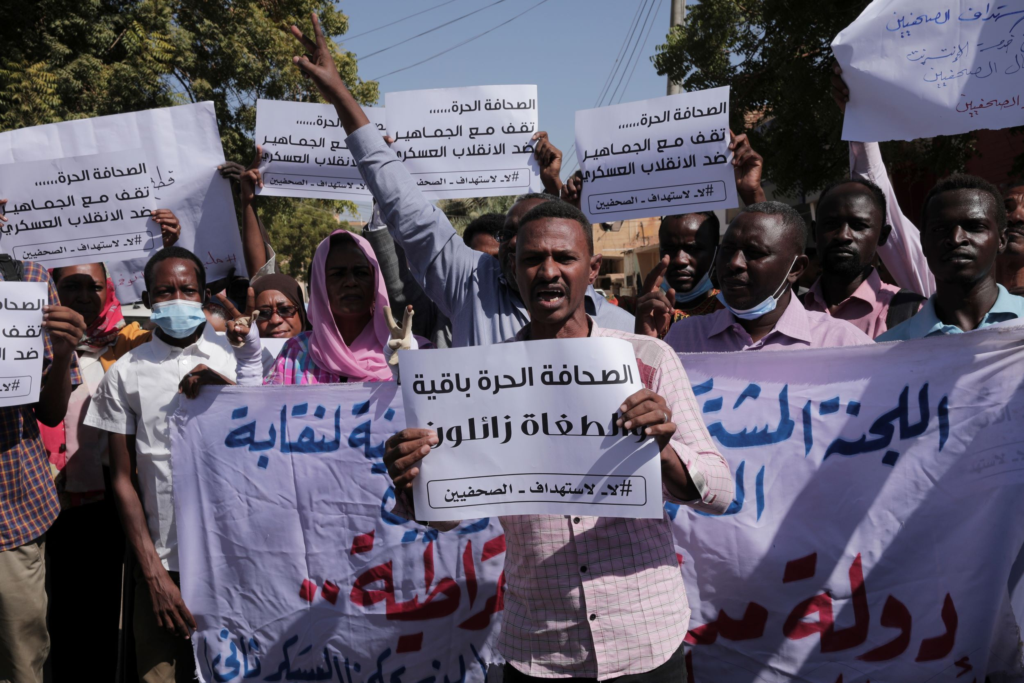
Several factors contribute to this neglect. Conflicts involving darker-skinned populations have historically received less sustained attention, revealing uncomfortable truths about racial bias in global media and humanitarian response. Sudan also experienced an early brain drain, as many educated professionals fled the country, leaving fewer voices able to advocate internationally or shape the narrative.
This silence has left Sudanese communities feeling abandoned, particularly by the wider Muslim Ummah. While past crises in Bosnia, Syria, and Afghanistan mobilized widespread concern and action, Sudan’s suffering has not been met with the same urgency. For many Sudanese, this lack of response is deeply wounding.
Aid on the Ground and the Shift Toward Long-Term Recovery
Despite these challenges, meaningful work is still being done. Organizations such as Humaniti are operating through trusted local partners, delivering aid in difficult and often inaccessible areas. Their efforts include establishing camps, distributing essential supplies, and supporting displaced communities in places like Al Dabbah and Kosti.
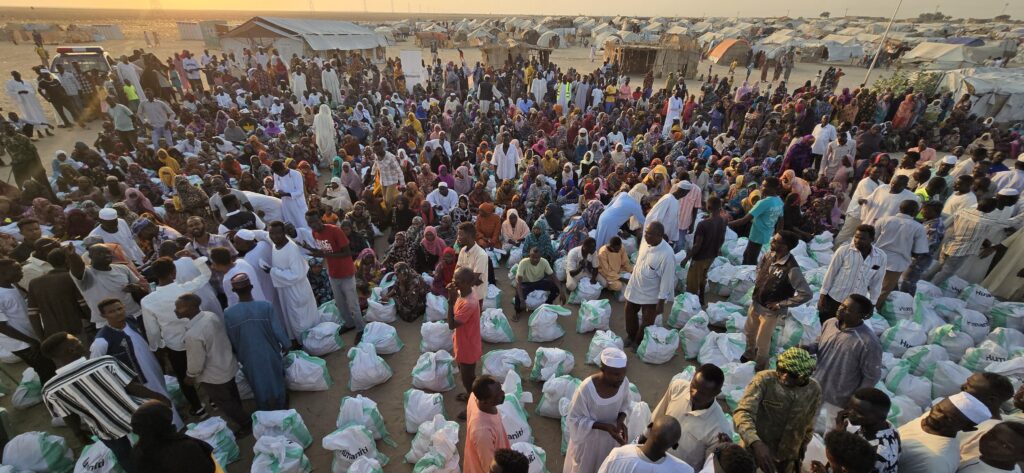
However, as the crisis continues, aid strategies are evolving. Emergency relief alone is no longer sufficient for a population that has lost homes, livelihoods, and stability. There is a growing focus on economic empowerment, rebuilding infrastructure, and teaching practical trades that allow communities to regain self-sufficiency.
The episode emphasizes the importance of accountability in aid work, warning against surface-level charity that prioritizes visibility over impact. Sustainable support, the conversation makes clear, requires deep local partnerships and real investment in people on the ground.
Hope in Sudan’s Youth and the Path Forward
Amid devastation, there is hope. Mansour describes meeting young Sudanese leaders in their 20s who are politically aware, deeply committed, and ready to rebuild.
“They are full of energy… They need to work together in order to rebuild Sudan. They need to connect with the ummah at large.”
These youth understand that Sudan’s struggle is connected to broader global injustices, and that unity is essential for lasting change. Their energy, clarity, and willingness to take responsibility stand in sharp contrast to the destruction around them. They are not waiting to be saved. They are preparing to rebuild.
Why Sudan Cannot Be Allowed to Fade Into Silence
Sudan’s humanitarian catastrophe is not invisible because it is small. It is invisible because it has been allowed to be overlooked. The war, the displacement, and the suffering are the result of deliberate systems, political interests, and a global failure to respond with consistency and moral clarity.
Listening to Sudanese voices is no longer optional. Understanding the reality on the ground is the first step toward accountability, solidarity, and action.
To learn more, watch the full episode of The Muslimi Experience and hear directly from Mansour Shouman’s firsthand reporting from inside Sudan.